Showing posts with label First Fantasy Campaign. Show all posts

Friday, December 30, 2022

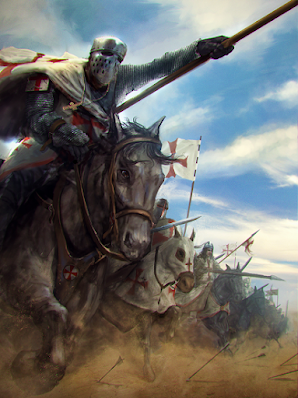
Crusaders: Early Paladins in Blackmoor


In the First Fantasy Campaign there are several references to individuals referred to as "Crusaders". The term Crusader has very specific real world connotations both to the events of the Crusades and to Christianity. Of course, this is no different from how early Blackmoor material refers to Vikings or other real world groups. The explanation is that Dave was developing Blackmoor from wargaming traditions and these references were mainly to be understood as units with specific stat blocks rather than all of the historic context needing to be ported over to a fantasy world. In subsequent iterations of Blackmoor, many of these real world references get replaced by other terms. 


So what about the Crusaders? In my version of Blackmoor, I have replaced them with Paladins. It should be noted that Paladins are mentioned in the First Fantasy Campaign. Paladins first appeared in published form for D&D with the Greyhawk supplement in 1975, which was available when the FFC was published (1977), but the references to Paladins in the FFC were more likely to Poul Anderson's Three Hearts and Three Lions. 


The character of Zvenzen was probably roleplayed close enough to the Paladin concept to be called the first Paladin PC in Blackmoor even though the class did not exist when Greg Svenson created his character for the game. 


But what can be gained from merging Paladins with the FFC idea of Crusaders? One thing is that when encountered these Crusaders are probably on what they see as a holy mission. In some cases they could be travelling to battle evil in the form of the Egg of Coot, the Afridhi or other monsters or demons. They could likely be in possession of Holy Swords as described in the FFC p 47. Or they could be questing for a Holy Sword, or other religious artifacts. 
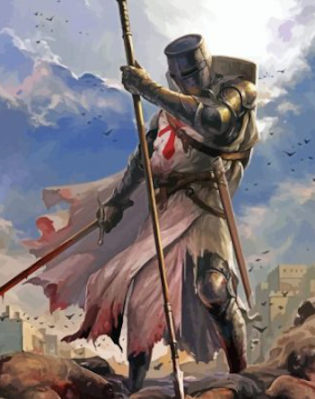


On page 49, one of the events that can occur by chance in the lands controlled by a player is that Crusaders are "passing through" the lands. This presents an opportunity for the PCs to recruit the unit of Crusaders (comparable to a mercenary unity as per the FFC), but they could also cause problems for the PCs if they have allowed morally grey activities to take place on their lands. 


My impression about these travelling Crusaders is that they might likely often hail from the Great Kingdom/The Empire if Thonia and be encountered when travelling on their quests across the lands of the North. 


In later version of Blackmoor, Zeitgeist Games released a free PDF (available on my website) detailing various organizations of Paladins for Blackmoor, but this PDF was fairly barebones and an adaptation of material from D&D 3E Unearthed Arcana. Still, it might have some merit to use this material to further develop different Crusader or Paladin Orders which is something that I am currently working on. 


-Havard


Thursday, October 1, 2020

A New Thonia Sourcebook (Dave Arneson Game Day 2020)!


Dave Arneson Game Day 2020 is here! October 1st is a great opportunity to celebrate gaming all around the world! 


FEATURES

Here are today's featured contributions:

  • The Stone Mask: A cursed item linked to the Temple of the Frog, created by Zeromaru X. Read all about it here.
  • Do you love Halflings, Docrae and Gnomes? Boddynock at the Gnomish Embassy has an article every day this week. Today's article oresents information for converting the short races of Blackmoor to the D&D 5th Edition Rules. Check it out here.  
For more details on what's going on, don't forget to visit the following places on the Internet:


FREEBIES
  • Thonia: Province of Bleakwood Sourcebook. This is the third installment in the Comeback Inn series of sourcebooks detailing the ten provinces of the Thonian Empire. This sourcebook has callbacks to such Dave Arneson creations as Adventures in Fantasy and The First Fantasy Campaign as well as tributes to Mike Carr and others. Get the PDF here.
  • Blackmoor Rampart, the MMRPG Newsletter #13 and 14 are now available here.


WHY DON'T YOU JOIN US?
Anyone can participate in Dave Arneson Game Day. If you have written something that I haven't noticed, ran a game and posted some pictures or a game report, let me know by posting in one of the forum links above. 

Go here to join Dave Arneson Game Day!


-Havard

Tuesday, November 27, 2018

First Fantasy Campaign Belongs to Arneson Estate Bledsaw Confirms


The First Fantasy Campaign (FFC) was published in 1977 by Judges Guild. It was written by Dave Arneson and edited by Bill Owen. Dave Arneson once told me that Judges Guid President and gaming legend of his own Bob Bledsaw had later transferred the rights to the FFC back to Dave. The two had apparently always been on friendly terms, ever since Dave Arneson worked for TSR as a liason to the Judges Guild.

Today, Bob Bledsaw II  was asked if he had any plans to rerelease the First Fantasy Campaign as a Print on Demand Product to which he responded:


"Not in the near future, sadly. I would love to see her in print again. Dave and I spoke about it before his passing, and he said there was some editing he wished to do to FFC, but that he wanted JG to release it. The written content is owned by his daughter now, and I put no pressure on her. It will be as she wishes."

It is a shame that Dave Arneson never got to do the editing he wanted for the FFC to share it with fans, but it is nice to see that the agreement between him and the elder Bledsaw was a formal agreement.


Blackmoor is a registered trademark that belongs to Wizards of the Coast.


-Havard
Wednesday, December 4, 2013

New Map of Castle Blackmoor!

This map appeared today on the new Dave Arneson Facebook Page. The map was recently discovered by Dave's daughter. It appears to be a photocopy of of the map from the First Fantasy Campaign book (JG). However, a quick comparison reveals never before seen hand written notes identifying the purpose of several of the rooms.

Given where this map was discovered, it seems likely that these notes are from Arneson himself.

Pre-production cover for Dungeons of Castle Blackmoor (2006) 

It would also be interesting to compare this map in greater detail to the floor plans of Castle Branzol which formed the inspiration for the original castle. In 2006 ZGG published Dungeons of Castle Blackmoor, but the book contained little information on the Castle itself. It has been speculated that both the Castle and the Dungeon could have been part of the never published DA5, of which there still may be a yet unrevealed manuscript out there.

In any case, this new map adds another piece to the puzzle that is Castle Blackmoor!

-Havard
Monday, September 9, 2013

The FFC Coming Back in Print?

The First Fantasy Campaign (FFC), published in 1975 by the Judges Guild Chronicles Dave Arneson's original Blackmoor campaign from the years 1971-1975.

Over the last few years, reprinting old gaming material has become increasingly popular among publishers. Recently, Robert Bledsaw III asked over at the Wilderlands Fans Facebook Group which old JG modules people would be interested in seeing reprinted and updated to Pathfinder or universal systems.

Not surprisingly, several people requested that the First Fantasy Campaign by Dave Arneson would be among the books reprinted. Now the question is, should JG be interested, would it be possible for them to reprint the FFC?

From what I understand, the IP to the FFC is owned by the Arneson family. Bob Bledsaw reverted the ownership of the FFC to Dave before Bledsaw passed away. When it comes to Blackmoor, that IP is owned by Wizards of the Coast. ZGG was operating under a lisence from WotC to publish Blackmoor material, but that lisence expired in 2008. It is possible that the FFC could be published without a lisence from WotC, but it is probably a good idea to check with them to avoid complications.

It should be noted that I am in no way a lawyer and do not posess any inside knowledge of any of this. The above is based on information that should be available online.

I think it would be amazing to have the FFC return in print or even as a PDF. To be the FFC does not need to be updated to have value for gamers today. OTOH, Dave Arneson did make a request if the FFC was to be reprinted, Robert Bledsaw III says (on FB, August 21st 2013):

"As for First Fantasy Campaign, Arneson offered to let us reprint FFC so long as some typos were corrected in a phone conversation with my dad. However, he passed away unexpectedly so we have no clue what typos he was referring to."
When original FFC manuscript fell into the lap of Judges Guild editor, Bill Owen back in 1977,  he decided not to make heavy alterations to the "somewhat disorganized" manuscript. Perhaps Dave Arneson would have liked to see a reprint that, while not neccessarily updated, might be edited in a way to make it organized in a way to make it more accessible to new audiences?


-Havard

Sunday, June 24, 2012

Mi-Karr and the Wizards Cabal

One of the most powerful Wizards in the history of Blackmoor is the mysterious Wizard of Mi-Karr. I decided to make use of this character in my Tales from the Vales Campaign. Very little is known about this Wizard who was introduced in the First Fantasy Campaign. Undoubtedly, Dave Arneson named the character after Mike Carr, although it doesnt seem like Mike actually played the character. More details on the origins of Mi-Karr and how I have adapted him to my campaign  can be found here.


Image source


-Havard

Monday, January 31, 2011

Bill Owen on the First Fantasy Campaign

In 1977, Judges Guild published the First Fantasy Campaign. In a recent Save or Die Podcast, Judges Guild Co-Founder Bill Owen talks about Judges Guild history, including his contact with Dave Arneson. Mr Owen and the legendary Bob Bledsaw had formed the Judges Guild in 1976. When they went to meet with TSR on July 18th 1976, it was Dave Arneson who gave them the verbal approval to publish D&D related material. More on this story can be learned from mr Owen's book, Judges Guild's Bob & Bill, a Cautionary Tale, which was reviewed at Grognardia.


Bill Owen in 1976


Dave Arneson left TSR later that same year and in 1977, he submitted his manuscript for the First Fantasy Campaign to Judges Guild for publishing. Echoing former TSR employees, Bill Owen describes the material Arneson sent them in the mail as "somewhat disorganised". Where mr. Owen differs from those who worked on Supplement II, is in his attitude towards the author. "I respected Arneson greatly", Owen says. He goes on to say that he was intimidated and frustrated that this work had been delegated to him, but the reason for that was that he was worried that the changes he felt neccessary to make in order to make the product "look like the kind of thing we would make" would not be worthy of an Arneson authored product. On the other hand, he stresses that Arneson was not the kind of person who might be upset about any such changes. "He was very easy going about the whole thing", Owen says, mirroring how many others have described Arneson's generous nature.

Perhaps it was this attitude of respect for the author and his professionality that made mr Owen that allowed the First Fantasy Campaign to become the gem among gaming products that it is. While others might have been tempted to apply heavy handed edititing in order to make the product onto a preconcieved idea of what a D&D product was supposed to look like in those days, Owen allowed the First Fantasy Campaign to appear as the unique product that it is, with the author's voice being heard clearly. We are eternally thankful for this!


Bill Owen in 2008


-Havard

Friday, January 28, 2011

Vampires of the North


"In a mirror of the white, Baron Fant, before a desecrated altair. Beastly howls of agony and frustration. 'Bring her back! Bring her back! We had a pact! HONOUR IT, YOU BASTARD! HONOUR IT!'"(-The Last Fantasy Campaign)

Many manifestations of the Undead roam the lands surrounding Blackmoor at night, but few as dreaded as the Vampire.The most well known Vampire of Blackmoor was Sir Fang. The true origins of this Vampire are unknown, but the story goes back to the time when Blackmoor was ruled by Baron Fant. Fant was one of the heroes of Blackmoor. Under his command, the forces of Blackmoor twice repelled invasions from the Egg of Coot. However, the second war against the forces of Coot, left its marks on the baron. From having been a hero of the land, he was now reduced to a dark and shadowy figure. Some whispered that he would feed the blood of mortals. They called him Sir Fang.

For a time, the people of Blackmoor did not know that their Baron had become a creature of the night. Eventually, his most loyal vassal, Sir Jenkins of Glendower was also turned into a Vampire. But such secrets can not be kept forever. Especially in a land home to heroes of such quality as in Blackmoor. When the truth was learned, the Great Vampire Hunt was launched, and eventually Sir Fang was killed.

But he didn't die of course. Two dwarf-like Vampire creatures dug up Sir Fang's Grave and the Vampires fled into the night together. With these allies Sir Fang formed a legion of Undead who would threaten Blackmoor on multiple occasions. Some say he operated from the deep caverns below Blackmoor itself. Others say he constructed himself a Castle far from civilization.


Behind the Scenes: Vampiric Bloodlines
It is never actually specified that Baron Fant and Sir Fang are one and the same, but it seems highly likely. How he became a Vampire is also not known, though it may easily have been connected to the Coot Invasion. The Last Fantasy Campaign ties it to the Egg's ally, Lord Ran, who although himself a Lich, may have turned the Baron into a Vampire. Perhaps Fant even let himself be turned, in despair after having learned that his wife and children had been killed.

Sir Fang and Sir Jenkins represent one of the Vampiric Bloodlines of Blackmoor. These are the classical vampires, as seen in 1970s horror films, as explained by original Blackmoor player Mike Mornard:

[One player] wanted to play a Vampire. He was extremely smart and capable, and as he got more and more experience he got tougher and tougher. This was the early 70s, so the model for 'vampire' was Christopher Lee in Hammer films. No deep folklore shit.
Well, after a time, nobody could touch Sir Fang. Yes, that was his name.
I have previously discussed how the threat of the vampires lead to the creation of the Cleric Class.The player wanting to play Sir Fang was most likely David Fant. Duane Jenkins played Sir Jenkins of Glendower, later referred to as the Vampire-Knight. 

Another type of vampires are the so-called "Fangettes". I picture these "dwarven vampries" as short, crouching Nosferatu-like vampires, dwelling underground in sewers and deep caves. In the original campaign they were likely played by Joe Vail.

A third type of Vampire could be the swamp dwelling Velya, from the BECMI rules. In Return to the Temple of the Frog, St. Stephen has become a Vampire, and it may easily have been a Velya who turned him.

Vampires seem to have had a strong impact on the Blackmoor campaign and they are discussed extensively in the First Fantasy Campaign. Richard Snider provided additional rule for these creatures, something that suggests that Arneson's group considered them an important part of the game.

Image Sources:
Vampire Castle
Vampire


-Havard

Tuesday, January 25, 2011

Sea Monsters of Blackmoor

As I mentioned in my blog article on Dinosaurs the other day, the First Fantasy Campaign reports of a great battle in Blackmoor Bay between sea vessels and sea monsters. In the same article, I also speculated that the aquatic dinosaurs from OD&D Supplement II. Let's take a closer look at these creatures:


Mososaurus:
These Gigantic marine lizards are over 40 ft long. They sometimes use their great bodies to overturn ships. Fortunately their main diet is other aquatic beasts.


Elasmosaurus:
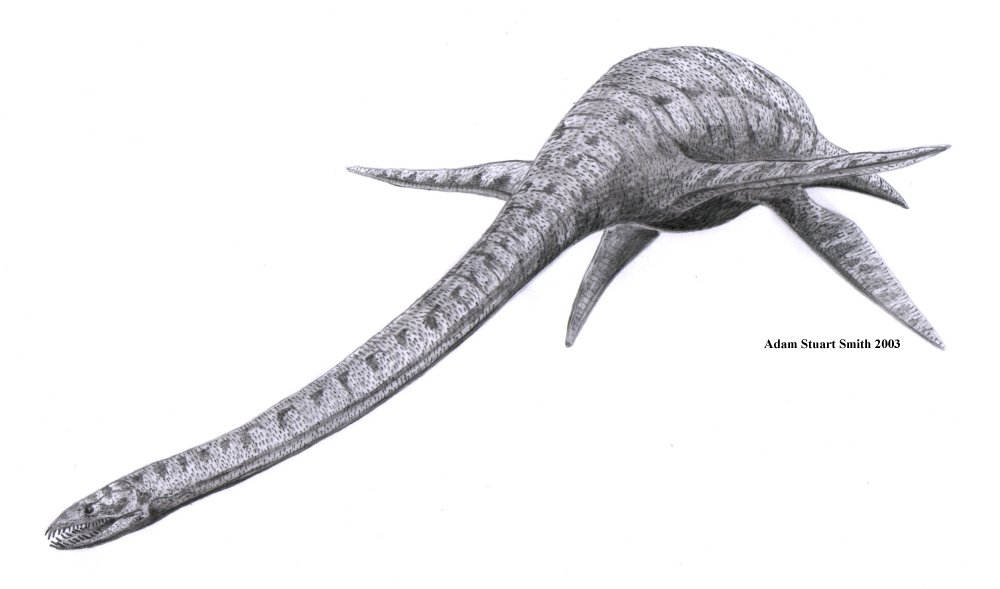
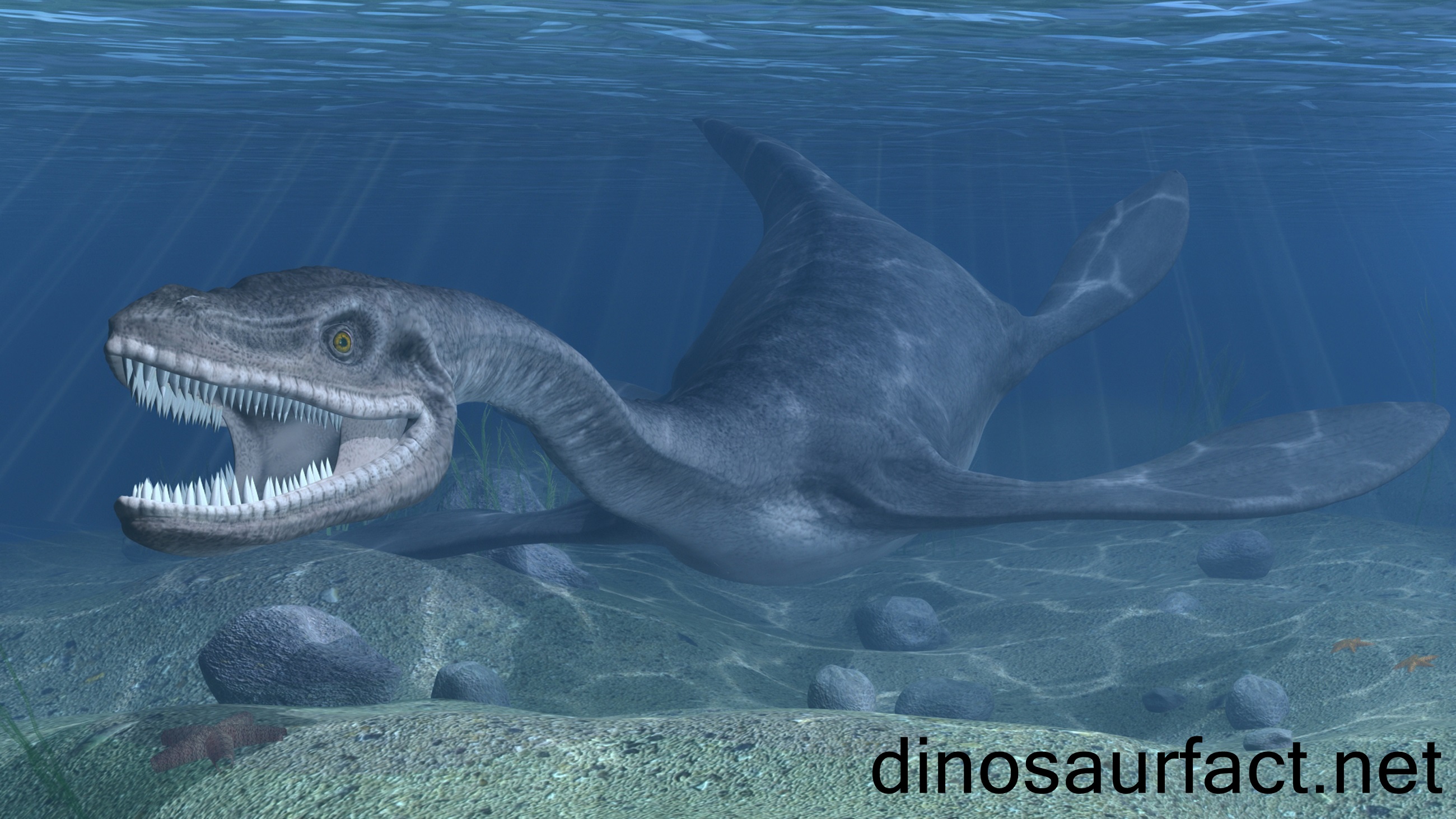
This creature is about 14 m (46 ft) in length and weighed over 2,000 kg (2.2 tons), making it the second longest plesiosaur. It has a large body and four flippers for limbs. More than half of its length is its neck, which had more than 70 vertebrae, more than any other animal. It has a relatively small head with sharp teeth. According to Supplement II, it loves snatching crewmen from ships.


Plesiosaurus:
These huge serpents have short necks, but large heads. They will not hesitate to attack ships venturing into their territories.


These are but a few of the various aquatic monsters mentioned in Supplement II. It seems likely that these creatures have some times been encountered in the deep rivers of the swamps near Blackmoor and in the Black Sea. Some speculate that these monsters are being bred in the realm of the Egg. Perhaps the Egg also has some way of controlling the beasts. Fortunately not all denizens of the Black Sea are this hostile.


Image Sources
Elasmosaur
Plesiosaurus
Mosasaur


-Havard

Sunday, September 12, 2010

City of the Gods: Bringing the Mystery back

Fans of the so called Golden Age D&D from the 1970s and early 80s sometimes criticizes later era game material for suffering from a need to create too much coherence, explaining much more than is really neccessary in order to run a fun game. The downside of this is of course that it detracts from what is important and even takes away some of the mystery.

Now, this is not normally my view of things. I am very interested in early age D&D, but I am also a fan of many of the products that were made in later decades. When looking at the various versions of City of the Gods, I am beginning to think that they were right. The best source to Dave Arneson's original version of City of the Gods is Rob Kuntz' account from the game Dave ran for him and Gary Gygax. The FFC also has references to the City of the Gods, but is fairly vague on the details.

While the 1970s sources are clear on the fact that the City of the Gods is a source of technology, it is Ritchie and Arneson's DA3 which introduces the space ship and its crewmembers. Granted, Stephen Rocklin goes all the way back to Supplement II, but even there it is unclear to whether St. Stephen is from space, another dimension or what. The vagueness of the nature of the city makes it more mysterious, leaving room for each player and DM to figure things out for themselves.


Image Source

-Havard

Tuesday, August 10, 2010

Dave Arneson's Fortune Cards

One of the news to have come out of GenCon this weekend is the planned concept of Fortune Cards for D&D 4E. In the upcoming Gamma World game, mutations will be made available in the form of cards, with randomized booster packs, remniscent of the booster packs from Magic the Gathering being sold to those interested in more mutations. According to Critical hits, on twitter the D&D4E Fortune Cards will follow the same model, though without the mutations:

"Fortune Cards: Cards in booster packs that include random benefits for characters. Adds extra "fun and power" for characters. Not an extra level of powerups, an extra level of chance and randomness."
The Piazza poster, Dulsi, made me aware of this idea of booster packs now being introduced into D&D. I have to say that I am very sceptical about this. I Cyber-Dave's post over at wizards.com sums up my feelings on this concept quite well. Fortune Cards are less problematic than card elements in Gamma World (and possibly also in the upcoming Ravenloft game), since the former can be ignored.

When I heard that WotC were planning to publish Fortune Cards, what first lept to my mind was the concept of Chance Cards, something that Dave Arneson started to use in his D&D Blackmoor Campaign in 1974. This was a rather different concept however. The Blackmoor Chance Cards were randomized story elements that were to be drawn once a year and which are detailed in the First Fantasy Campaign. As Arneson relates, The Great Peasant Revolt and the Raid from the Duchy of Ten were prominent examples of how the Chance Cards affected the campaign. Perhaps something like this would be worth looking into for WotC as well?


Image Source

-Havard

Wednesday, July 14, 2010

The Original Blackmoor Players

I will not claim to be a great DM. Some of my campaigns have been hugely successful. Others have been total disasters. When I do succeed, I suppose I can take some credit for the result, but largely it is also due to the players. Roleplaying is a collaborative effort and a campaign is developed by the group rather than a single individual.


Dave Arneson recognized this. As early as in the First Fantasy campaign, he credits players such as Greg Svenson and Richard Snider as having had a heavy impact on Blackmoor. Others are also mentioned, scattered around in the text. As Dave's 30 year spanning campaign developed, he allowed other players to have their input on how the campaign evolved. When ZGG published the D20 Dave Arneson's Blackmoor Sourcebook in 2003, Dave also credited the players he considered the Original Blackmoor Players.

Blackmoor fan, Finarvyn, made a compilation of the players known to have taken part in Arneson's campaign over the years, confirmed by Dave Arneson himself:

Dave Arneson – Referee
Malia Arneson-Weinhagen– Thief/Monk
Jim Abler – Mage (Evil)
Jim Barber – Elf
Dave Belfry – Dwarf
Scott Belfry
Blue Petal – Pre-Blackmoor
Mike Carr – Cleric; Bishop Carr; Mi-Kar
Larry Bond
Steve Dabenspeck
Dave Fant – Baron of Blackmoor
Kletcher Fletcher – Ranger
Giovanna Frengi – Dwarven Battle maid
Frederick Paul Funk III – Orc; Funk I King of All Orcs
Pete Gaylord – Mage; Wizard of the Woods
Phil Grant – Elf
Bill Heaton – The Blue Rider; Paladin
Harry Holman – Dwarf
Duane Jenkins – Vampire-Knight; Sir Jenkins (Dave says: “He wanted to be a vampire, but I kept frustrating him. Hee, hee.”)
Rick (Mel) Johnson – Mello; Halfling
Tony Kellen
Tim Kirkpatrick – Halfling
Kurt Krey – First ever Evil Wizard PC of Blackmoor
Jim Lafferie – Mage
Steve Lortz – Lortz the Dwarf
Ross Maker – Dwarf
David Megarry
Bob Meyer – Robert the Bald
Mike Mornard (Dave says: “Mike was actually in my campaign, Gary’s campaign, and Phil Barker’s.”)
Chuck Munson
Dale Nelson
Dan Nicholson– Merchant
Martin Noetzel – Elf
Walter Oberstar – Oberstar the Dwarf
Cliff Olilla – Pre-Blackmoor
John Snider – Fighter
Richard Snider – Cleric; The Flying Monk
* Chuck Soukup: (Dave says: “Nah, just one of the first bad guys.”)
* John Soukup – Balrog (Dave says: “Nah, just one of the first bad guys.”)
Greg Svenson – Great Svenny; Swenny I, King of All Good; Zvenzon (Dave says: “King?? Certainly the leader of all the good guys.”)
Dave Wesley – Half-elf


* The Soukup brothers were added again as per Svenny's comments.


These names were removed from the original list, based on Dave Arneson’s comments!
Mike Belfry (Dave says: “Mike?”)
Mike Norman (Dave says: “Mike never played, although he was in the group.”)
Greg Scott -- Egg of Coot (Dave says: “No, he never played, just a local character I used.”)


Internet claim (can someone confirm this?)
Joe Vail – Dwarves Frick & Frack; vampire-dwarf slaves the "Fang-ettes"
Note: This name was NOT on Dave’s list, either.


Edit: See this updated list of Original Blackmoor Players at the Comeback Inn Forum (Registry required)

image source: http://angryjoeshow.com/2009/03/basically-vin-diesel-kicks-ass/


-Havard

Thursday, June 17, 2010

DA5 City of Blackmoor

Over at the Comeback Inn, we have been discussing vapourware products for Dave Arneson's Blackmoor. That is, products which were planned, or even written, but never published. Most famous of these is DA5 City of Blackmoor. Supposedly, it was completed, but for various reasons never published back when TSR were doing the DA series. 


Although we will probably never get to see DA5 City of Blackmoor, it can be intersting to speculate to what that product may have contained. We do know that it was written by David Ritchie as part of the DA series and that Ritchie used Arneson's notes as a basis.

The title City of Blackmoor is what tells us the most of what this product is about. This would have been an adventure set in Blackmoor Town itself. Looking at the style of the other DA modules, there may likely have been room for more than just an adventure. The other DA modules have plenty of room for backstory, NPCs and additional setting material.

Since Ritchie was working from Arneson's notes, it would make sense to look at items like the FFC which would have been available to Ritchie. As mentioned elsewhere, it is likely that the map of Blackmoor town from the FFC would have been included. Most likely this would have been expanded upon, with more information about the different buildings than what the FFC provides.

The next part from the FFC which might be useful is the description of Castle Blackmoor. The Castle itself is a wonderful opportunity for adventure and the FFC provides alot of information about the different parts of the castle and its inhabitants.

From the castle, the next step would be the dungeons themselves. Dungeons of Castle Blackmoor and the FFC might both include hints on what DA5 may have contained. Most likely, this would have been the main focus of the adventure.


Finally, there is the metaplot. The entire DA series was written to allow PCs from the Known World to travel back in time and adventure in Blackmoor. It seems very likely that the same would be true for DA5. DA5 would also have to take into account that events of the previous DA modules, with the Afridhi having been defeated in DA4 etc. ZG's Dungeons of Castle Blackmoor has one big problem. The idea of a castle in the middle of Blackmoor, the royal residence, sitting on top of a 20 layered dungeon, home of demons and whatnot just does not make sense, does it? However, this was not so problematic in Arneson's own campaign. In his campaign, the forces of good were repeatedly driven out of Blackmoor town by the forces of the Egg of Coot. In this context, it made perfect sense to run a campaign where you were fighting to reclaim the city and the castle.

It is not unlikely that Ritchie would have deviced a similar storyline for DA5. Perhaps, after the Afridhi invasions, you would have a new invasion of the Egg's forces, lead by King Funk. This would basically repeat events from the original campaign, but allow the PCs to venture into the dungeons and defeat the Orc King once and for all. Leaving room to take the battle to the Realm of the Egg in a later DA module? 


Click here for more discussion of this product.


-Havard

Saturday, December 19, 2009

Was Supplement II Arneson's work?


Well, certainly it was, but as it turns out only parts of what appeared in D&D Supplement II: Blackmoor was written by Dave Arneson himself. Over at the Dragonsfoot Forums , people have been investigating which parts of Supplement II were Arneson's. In a recent post, Aldarron sums it like this:

Arnesons material in Supp II;
Temple of the Frog, pretty much straight from Arneson, with light editing by Kask. Marsh's statement that Gygax converted it must be a misunderstanding, generalizing from the rest of Arnesons material (which was somewhat converted by Kask). My reason for saying this is that anyone who has read TotF will be struck by all the non standard FFC like approaches, mechanics and terminology used. There's nothing Gygaxian about it, not even the way stats or lack thereof are presented.

The Disease section was straight from Arneson with only light editing by Kask. (I asked him, see pages 138-40 of Q&A here on DF and a few pages earlier for monk topic). Arneson also wrote a similar article on diseases for the first Pegasus magazine.

The hit location was perhaps a little more closely edited but was also from Arneson.

The Assasin , including the assasination table, was "reimagined" from Arnesonian material to conform to "standard" Greyhawk D&D. (same Q&A with Tim Kask pages). Arneson, on his web page, mentions a backstabbing thief arising in Blackmoor - likely the progenetor of the Assasin, since the D&D thief came from another gaming group and was first written up by Gygax.

The rest of the material in Supp II came from other people.
Apparently, Arneson provided enough material for an entire supplement himself, but other people at TSR considered the rest of the material "unusable". One can only wonder what this submitted, but never published material might have been. Some have speculated that this remaining material was what made it to become the First Fantasy Campaign Supplement. If so, it is great that Arneson with the help of Bob Bledsaw of Judges Guild made the material available. It is interesting that TSR decided not to make more use of what Arneson submitted. It has been suggested that it had to do with the quality of the material, but I suspect it had as much to do with understanding Arneson's ideas, which at times were quite different from that of Gygax.


-Havard

Sunday, October 11, 2009

THE GAZETTEER OF BLACKMOOR


I will no doubt be talking more about the official Blackmoor products (old and new) later in this blog, but today I would like to draw attention to an unofficial product: The Gazetteer of Blackmoor, by David Ross (aka Zimriel). The author (though he calls himself an editor) has done an amazing job going through the material published for Blackmoor in the 70s and 80s. Ross managed to incorporate material, not only from the First Fantasy Campaign and the DA Modules, but also the more obscure material like the adventure Garbage Pits of Despair and the information from the Domesday Book.

The style of writing is unique in terms of fan RPG products:

I (David Ross) "wrote" the gazetteer... in a very, very technical sense. My aim was to clarify what was really the work of Dave Arneson (1970-1987) and, to a much lesser extent, Dave Ritchie (1986-7); I saw my role as an editor. This ZIP has 13 files (12 RTF's, one XLS) of the history and geography of the world's oldest Role-Playing fantasy world. You will still need the DA series in order to play; there are no warez'ed maps or modules here.
-David Ross(http://pages.sbcglobal.net/zimriel/Blackmoor/)


Ross is not exaggerating. The gazetteer is written in a highly academic style and is extremely well researched. This makes it challenging to read if you aren't already familiar with Blackmoor, but also highly valuable since it doesnt deviate from Arneson's intentions. Ross includes his own speculation and analysis, but is always clear on what comes from Arneson and which conclusions are his own.

The files are highly recommended for any fan of Blackmoor. Rumour has it that the ZGG staff adviced their freelance authors to read through the gazetteer before making submissions for the 3E line. If you haven't already, go over to Blackmoor - Home of the Ancients and download it now! :)


Havard

Tuesday, October 6, 2009

BLACKMOOR MAPS


A few days ago, I asked the wise folks over at the Original D&D Discussion Forum about the origins of the Blackmoor map. Two rumours have been circulating about the maps as told by Finarvyn:

1. Both Blackmoor and Greyhawk campaigns were tied to the old C&C Society kingdoms map. (This certainly fits the Greyhawk=Chicago model that Gary has stated but, since the original Blackmoor campaign was not directly linked to the original Greyhawk campaign, it doesn't really explain Blackmoor's coastline. Also, I can't recall if Dave has ever made this claim, or if it was a Gary-only thing.)

2. Blackmoor was based on Dutch maps, only possibly inverted or reversed or somehow in a way that makes them hard to identify. (I've spent a lot of time looking at Dutch coastlines and haven't been able to match anything up close enough to match Dave's maps. However, since this is Dave's version of the story I'm inclined to put a lot of faith into it.)


Now, it didnt take long for replies to my query. James Mishler posted this excellent article on the connection between the Dutch maps and the original Blackmoor map.

I am still not convinced that the C&C Society maps are irrelevant to the shape Blackmoor took, but James certainly convinced me of the connections to the Dutch maps. His blog article is a real gem!

Havard

Monday, October 5, 2009

THE BIRTH OF BLACKMOOR

Blackmoor was created by Dave Arneson in 1970. He developed his own rules for the game, which gradually grew more advanced, before showing it to Gary Gygax, who had been working with similar ideas, in 1971. The two of them went on to create Dungeons & Dragons which eventually was published in 1974.

It must have been fascinating to take part in the early Blackmoor games. Today it is difficult to imagine a world where the phenomenon of roleplaying games doesn't exist. Although most experienced gamers can perhaps recall the wonders of our own first introductions to the game. I imagine being part of the birth of the hobby must have been a bit like that, only even more amazing.


Original Blackmoor player Greg Svenson describes his introduction to the game like this:

During the Christmas break of 1970-71; our gaming group was meeting in Dave Arneson's basement in St. Paul, Minnesota. We had been playing a big Napoleonics miniatures campaign, which was getting bogged down in long drawn out miniatures battles. So, as a diversion for the group, one weekend Dave set up Blackmoor instead of Napoleonics on his ping pong table. The rules we used were based on "Chainmail", which is a set of medieval miniature rules with a fantasy supplement allowing for magic and various beings found in the "Lord of the Rings". I had never played any games like it before, although I had read "Lord of the Rings". Other members of the group had played the game before, but always doing adventures in and around the town of Blackmoor. By the end of the weekend I had fallen in love with the game.
-The first Dungeon Adventure, Greg Svenson


The most extensive documentation fromthose early days is the First Fantasy Campaign (FCC). This book, published in 1977 by Judges Guild, can best be described as a collection of notes, sketches and house rules from Arneson's campaign. To Blackmoor diehards, it is a gold mine of ideas and insight into the mind of a genius. Although many of Arneson's ideas have been published and revised in later products, there are still hundreds of elements in the FCC that are still waiting to be discovered.

***

Dave Arneson Game Day 2026 Approaching!

  As usual, we are celebrating Dave Arneson Game Day on Dave Arneson's birthday, October 1st. The week leading up to Dave Arneson Game D...