Wednesday, September 22, 2010
Defining the setting

Philosopher over at the Piazza, challenged me to write a text defining Blackmoor in one or two paragraphs. Trying to pin down a setting in just a few paragraphs was trickier than I thought. Here's what I've got so far:
Blackmoor is a small Kingdom which until recently was the northernmost province of a decadent Empire. Unlike the Thonian Empire, Blackmoor embodies the ideals of justice and chivalry; a realm of light surrounded by corruption and evil. Blackmoor is in desperate need of heroes because it is surrounded by enemies. The Mordor-like realm of the Egg of Coot to the North. Viking-like Skandaharian raiders attack both its coastal lands. And an exotic demon-worshipping conqueror race army approaces from the west.
Blackmoor is a classic fantasy setting with a twist: highly technological items can be found and used by heroes and villains alike. Mechanical warriors guard powerful wizards. The sages of the Blackmoor University are working with the dwarves to figure out how these items work, where they came from and how to use them. This could be the key to saving Blackmoor from its immediate destruction. Tragically however, it could also be what spells their doom, in the prophesied apocalypse, known as Great Rain of Fire.
-Havard

Tuesday, September 21, 2010
And then we were 80!

Milestone reached!It's great to see more and more people reading this blog. The fact that people out there want to read the things I write is my main motivation for keeping this place going. My last couple of entries have also seen a surge of comments which is always appreciated. According to Trey's Scale, I am now a 6th level blogger. Not bad for a little Blackmoorian?
Thanks everyone for your continued support!
-Havard
Monday, September 20, 2010
Formative Images
Since Grognardia brought up the subject of images you associate D&D with, its been all over the blogosphere. Here are a few which shaped my young mind, coming into D&D:


 Yes, the story of Aleena had a tremendous impact on me, just like it did with most people who got into D&D through Frank Mentzer's Basic Set. Unlike those who started with previous versions of D&D and often moved on to AD&D, many of us who started with BECMI stayed with that edition. Sure, we also played AD&D and other RPGs, but our hearts forever remained with Aleena and the desire to finally get to give Bargle the punishment he deserved.
-Havard


-Havard
Saturday, September 18, 2010
Hobbits as weaklings?
I have previously discussed the Tolkienesque nature of Dave Arneson's Halflings. In all early D&D, the connection to Tolkien was apparent. With the release of the third edition, however, the halflings were re-imagined in a way which grognards have described as "ninja Kender". The reason for this change was a view of the older edition D&D Halflings, not just among WotC employees, but I believe among many D&D players as a whole, that Halflings in D&D were a race of fat, weaklings, useless as PC option.
When ZGG began publishing Blackmoor in 2003, they announced that Blackmoor's Halflings would be a return to the Tolkienesque halflings, in the spirit of Dave Arneson's original fantasy campaign. However, what does that really mean? Is it true that Tolkien himself described Hobbits as weak, fat and useless? Not at all, of course!
When looking at Tolkien's Hobbits, I think it is useful to distinguish between Hobbit adventurers and regular folks. Much of the early day inspiration for D&D halflings seems to have been drawn from the first part of the novel The Hobbit. But the descriptions there refers to the non-adventurer Hobbits of the Shire. Bilbo is said to have been the first adventurer from the shire (though there are some references to previous heroes of the race elsewhere in Tolkien's writing). Still, Bilbo wasn't much of an adventurer when he was first dragged out of his hobbit hole by Gandalf and the dwarves.
Similarly Frodo, Sam, Pippin and Merry were completely unexperienced at the onset of the Lord of the Rings. Compare this to the same characters towards the end of the trilogy. The Hobbits have all become heroes in their own right. They have no problem disposing the stooges of Saruman who have been destroying the Shire in their absence. Similarly, Bilbo makes the trek from the Shire to Rivendell completely on his own, even though the distance he covered was known to be populated by Wights, Trolls and other evils.
One of the abilities most often overlooked in Hobbits is their resiliance. Gollum was able to keep the Ring for centuries. Still, he had retained enough of his "humanity" to give Frodo hope that he could be redeemed in Return of the King. Frodo was the only one who would be able to carry the Ring to Mordor, a task none of the heroes of the other races would have been able to accomplish. Sam was even able to give back the Ring to Frodo after "carrying it for a while" for his master.
Take a look at Sam carrying Frodo up the slope towards Mount Doom. Is that the work of a weakling? I think not! Hobbits can be tough heroes without the need of being turned into anorectic ninja elflings. Dave Arneson and his players were aware of this, as shown in the adventures of Mello and his companions.
-Havard
When ZGG began publishing Blackmoor in 2003, they announced that Blackmoor's Halflings would be a return to the Tolkienesque halflings, in the spirit of Dave Arneson's original fantasy campaign. However, what does that really mean? Is it true that Tolkien himself described Hobbits as weak, fat and useless? Not at all, of course!
 |
| Sam carries Frodo. Scene: Return of the King, Peter Jackson, Dir. 2003 |
When looking at Tolkien's Hobbits, I think it is useful to distinguish between Hobbit adventurers and regular folks. Much of the early day inspiration for D&D halflings seems to have been drawn from the first part of the novel The Hobbit. But the descriptions there refers to the non-adventurer Hobbits of the Shire. Bilbo is said to have been the first adventurer from the shire (though there are some references to previous heroes of the race elsewhere in Tolkien's writing). Still, Bilbo wasn't much of an adventurer when he was first dragged out of his hobbit hole by Gandalf and the dwarves.
Similarly Frodo, Sam, Pippin and Merry were completely unexperienced at the onset of the Lord of the Rings. Compare this to the same characters towards the end of the trilogy. The Hobbits have all become heroes in their own right. They have no problem disposing the stooges of Saruman who have been destroying the Shire in their absence. Similarly, Bilbo makes the trek from the Shire to Rivendell completely on his own, even though the distance he covered was known to be populated by Wights, Trolls and other evils.
One of the abilities most often overlooked in Hobbits is their resiliance. Gollum was able to keep the Ring for centuries. Still, he had retained enough of his "humanity" to give Frodo hope that he could be redeemed in Return of the King. Frodo was the only one who would be able to carry the Ring to Mordor, a task none of the heroes of the other races would have been able to accomplish. Sam was even able to give back the Ring to Frodo after "carrying it for a while" for his master.
Take a look at Sam carrying Frodo up the slope towards Mount Doom. Is that the work of a weakling? I think not! Hobbits can be tough heroes without the need of being turned into anorectic ninja elflings. Dave Arneson and his players were aware of this, as shown in the adventures of Mello and his companions.
-Havard
Thursday, September 16, 2010
The Most Enthusiastic Blackmoor Player
In the First Fantasy Campaign, Dave Arneson described Richard Snider as one of the most enthusiastic players of the original Blackmoor game.
 Last November, I was sad to report of his passing. In my experience, a D&D campaign is never better than the players. The best games I have DMed, have been so enjoyable, as much thanks to the players as to the DM. Arneson recognized how lucky he was to have such great players. In the FFC, Arneson describes how Snider "evolved an entirely separate campaign and mythos" as well as developing more advanced rules for dragons.
Richard later went on to develop his own setting; the Perilous Lands, which he continued to work on long after the books for it had been out of print.
Above is a picure of Richard from the 1980s Origins Convention.
-Havard
 Last November, I was sad to report of his passing. In my experience, a D&D campaign is never better than the players. The best games I have DMed, have been so enjoyable, as much thanks to the players as to the DM. Arneson recognized how lucky he was to have such great players. In the FFC, Arneson describes how Snider "evolved an entirely separate campaign and mythos" as well as developing more advanced rules for dragons.
Richard later went on to develop his own setting; the Perilous Lands, which he continued to work on long after the books for it had been out of print.
Above is a picure of Richard from the 1980s Origins Convention.
-Havard
Wednesday, September 15, 2010
Dave Arneson's XP system
 I just read Paladin's interesting article on the XP system in Dragons at Dawn. According to the article, Dave Arneson did not award any experience points for killing monsters or taking their treasure. Instead they were awarded for roleplaying only.
In my opinion XPs are a useful tool in encouraging the players to behave in certain ways. I can think of few players who really need encouraging to go out and kill things and take their stuff. Arneson found a way around that. Worth thinking about for any campaign.
Image Source
-Havard
Douglas Niles to appear on Dragonsfoot

Just the other day I saw the announcement that Douglas Niles will appear in his own Q&A thread on Dragonsfoot. Niles is probably most famous for his novels and Dragonlance and Forgotten Realms material, but my favorite work of his remanis CM1 Test of the Warlords.
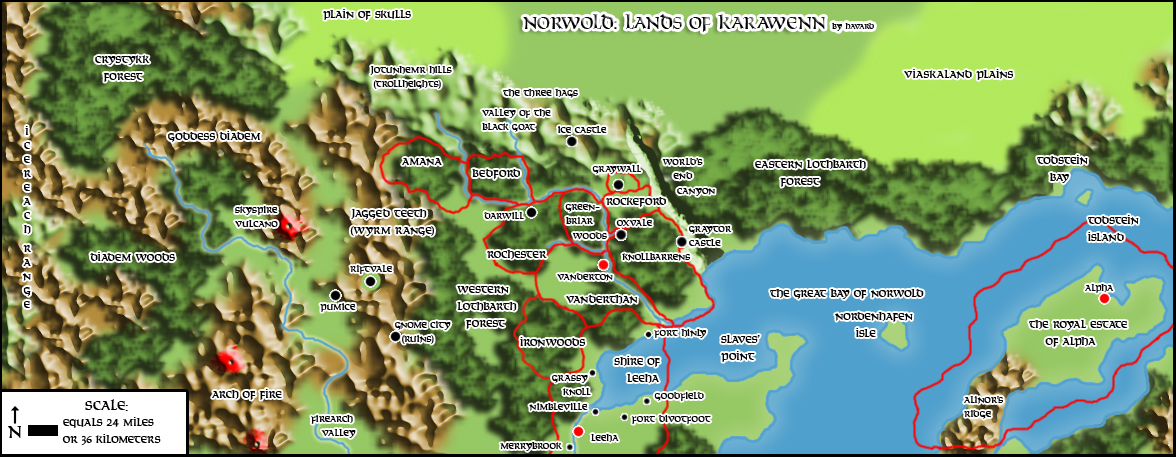
I also grew to enjoy his Quest Triad novels (warning: written for "young adult readers"). I adapted that setting, Karawenn, to Norwold. You can see a map from my adaptation here.
I am looking forward to seeing Niles answering the questions I have posted in his thread so far.
Doug Niles on Pen & Paper RPG
-Havard
Subscribe to:
Posts (Atom)
TSR's Roger E. Moore Writes for Blackmoor Themed issue of Threshold Magazine!
I almost cannot believe it, but the fan magazine for the D&D World of Mystara has just released its 38th issue. As always, the magazin...

-
 The first Cleric in the history of D&D was played by original Blackmoor player and former TSR Editor Mike Carr and the character was la...
 -
The MN Gathering 2025 is the annual meetup of Minnesota Gamers, including several of the original Blackmoor Bunch.This year the event took...
-
 With Dragon magazine's 35th Anniversary (and issue 400 being published) this month, Roger Moore apparently revised his old article abo...